
Registered under CRPCS Trust (IV-00823/2024)
GENE-SIGHT: Genetics-enabled Social Innovation for Glaucoma Health & Treatment
A project in collaboration with University of Salford, UK
GENE-SIGHT is an international, interdisciplinary collaboration that brings together cutting-edge advances in genomics with public health, policy, and community engagement to transform how hereditary glaucoma is identified, managed, and prevented. With a strong focus on improving healthy living and long-term outcomes for individuals and families affected by genetic forms of glaucoma in West Bengal, the initiative aims to move beyond late-stage diagnosis toward earlier, risk-based detection and intervention. By integrating scientific discovery with real-world health system design, GENE-SIGHT seeks to bridge the gap between knowledge and impact—ensuring that genetic insights translate into tangible benefits and enrich lives for patients and communities.
This unique collaboration between the University of Salford, United Kingdom, and the Centre for Research in Policy Communication and Society, Kolkata, exemplifies how laboratory-based research can be meaningfully translated into public good. Through policy engagement, stakeholder partnerships, and implementation-focused research, GENE-SIGHT is developing scalable models that connect genomic science with healthcare delivery—ultimately contributing to more equitable, preventive, and person-centred approaches to eye health.

Our collaborator:
Prof Arijit Mukhopadhyay
Professor of Precision Health
University of Salford, United Kingdom
Adjunct Prof: CSIR-IGIB, New Delhi and
MAHE, Manipal, Karnataka
Prof. Mukhopadhyay is a researcher in human genetics since 1999. He has been a Principal Investigator leading a research group on genetic basis for human diseases since 2007 and have worked across different countries and continents. He has supervised 16 PhD students to completion and has published over 70 peer reviewed articles in international journals (>3200 citations; h-index 32). A major part of Prof Mukhopadhyay’s career is focused on genetics of eye diseases – especially glaucoma. He and his colleagues were the first to report the genetic basis of primary open angle glaucoma from India. He has taken major initiatives on public outreach and awareness about genetic basis of glaucoma and the benefits of Genetic Counselling.
His publications are available on this link: https://scholar.google.com/citations?user=GVumFWoAAAAJ&hl=en

Project Coordinator:
Mr. Sabir Ahamed
Governing Body member
CRPCS, Kolkata
Sabir Ahamed is the National Research Coordinator at Pratichi Institute, Pratichi (India) Trust, and the founder of the 'Know Your Neighbour' initiative at Sabar Institute. He is a passionate storyteller who uses history on the street to break stereotypes around communities and a data storyteller advocating for an inclusive India. His research interests span digital disparity, the socio-economic status of Muslims in India, child protection, and education. Sabir is proficient in handling official Indian statistics, including NSS, Census, DISE, and AISHA, and is skilled in data analysis software such as Stata and R. Beyond his research, Sabir has been instrumental in promoting the Right to Information Act 2005 in West Bengal, enhancing transparency and accountability in governance. His current work involves facilitating legal consultation for those who have been affected by the Special Intensive Revision or the SIR conducted by the Election Commission of India. He is an active member of campaigns that encourage dialogue among diverse communities. Sabir regularly contributes to national and regional dailies, including The Indian Express, The Hindu, The Wire (India), The Telegraph (India), The Daily Prothom Alo, and Ei Samay.
Events
An MoU was signed between CRPCS and the University of Salford on 25 February, 2026, in Prof. Anita Banerjee Memorial Hall, Jadavpur University.


A day-long consultation meeting was held on 25 February, 2026, in Prof. Anita Banerjee Memorial Hall, Jadavpur University. It was attended by geneticists, genetic counsellors, opthalmologists, optometrists, professors, researchers, policy specialists and members of various NGOs.


Coming up!
Policy Consultation on Integrating Genetic Screening into Public Health Systems for Inherited Glaucoma
Organised by University of Salford, United Kingdom and Centre for Research in Policy Community and Society, West Bengal
Amartya Sen Research Centre
IB-184, IB Block, Sector 3, Bidhannagar, Kolkata, West Bengal 700106
Saturday, 4 July 2026
Overview
This will be a high-level stakeholder consultation to be held in Kolkata on 4 July 2026, bringing together clinicians, researchers, policymakers, and public health practitioners to examine the integration of genetic screening into public health systems for the prevention of hereditary glaucoma through early clinical interventions.
The consultation builds on emerging evidence that a subset of glaucoma—particularly familial and juvenile forms—is genetically predictable and clinically actionable prior to the onset of irreversible vision loss. Despite this, current health system design remains oriented toward diagnosis and management after disease manifestation.
The meeting will explore how existing institutional frameworks in West Bengal and India can be aligned to support earlier identification of risk and structured preventive care.
Background: From Disease Management to Risk-Based Prevention
India’s health system has made significant advances in expanding access to treatment and financial protection, including through publicly funded insurance schemes and the National Policy for Rare Diseases (2021). These frameworks are largely structured around clinically manifest disease and treatment cost. However, this design creates a gap for conditions where:
- Risk is identifiable in advance
- Disease progression can be monitored
- Early intervention can prevent irreversible outcomes
- Familial glaucoma represents such a condition.
Key Issues for Discussion
1. Identification of High-Risk Populations
2. Integration of Genetic Screening
3. Clinical Pathways and Protocols
4. Health System Alignment
5. Workforce and Capacity
Towards a State-Level Pilot
A key outcome of the consultation will be to explore the design of a state-level pilot in West Bengal.
Why This Matters
Preventable vision loss carries long-term individual, social, and economic consequences.
What is the evidence
As a pilot study we have shown how early genetics-led detection can help prevent the vision loss in an under-privileged family in rural West Bengal. This is documented in two short films: Vision of the Blind Lady (https://youtu.be/MgWYvDEY3NA) and Ripples of Light (https://youtu.be/u2cCRantInY).
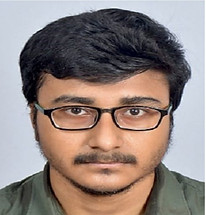
National Organising Committee for 4th July

.png)



Participation
Date: Saturday, 4 July 2026
Time: 11 AM onwards
Check in starts at 10:30 AM
Location:
Amartya Sen Research Centre
IB-184, IB Block, Sector 3, Bidhannagar, Kolkata, West Bengal 700106
Access: By prior registration